Texas Instruments
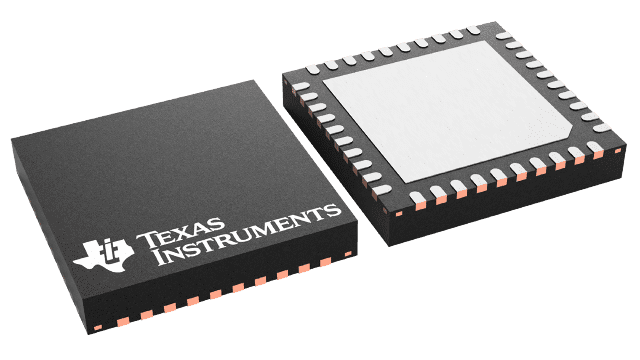
CC2540TF256RHAT
CC2540TF256RHAT
Couldn't load pickup availability
CC2540TF256RHAT Texas Instruments - Yeehing Electronics
Extended industrial temperature Bluetooth® Low Energy (LE) wireless MCU
Pricing (USD)
| Quantity | Unit Price |
| 1 — 99 | 4.674 |
| 100 — 249 | 3.81 |
| 250 — 999 | 2.995 |
| 1,000 + | 1.78 |
The above prices are for reference only.
Specifications
| Manufacturer | Texas Instruments |
| Product Category | RF Microcontrollers - MCU |
| RoHS | Y |
| Core | 8051 |
| Operating Frequency | 2.4 GHz |
| Data Bus Width | 8 bit |
| Program Memory Size | 256 kB |
| Data RAM Size | 8 kB |
| Maximum Clock Frequency | 32 MHz |
| Operating Supply Voltage | 2 V to 3.6 V |
| Maximum Operating Temperature | + 125 C |
| Package / Case | VQFN-40 |
| Mounting Style | SMD/SMT |
| Packaging | Reel |
| Output Power | 4 dBm |
| Series | CC2540T |
| Brand | Texas Instruments |
| Interface Type | USB |
| Number of I/Os | 21 I/O |
| Development Kit | CC2540T Mini Development Kit |
| Minimum Operating Temperature | - 40 C |
| Moisture Sensitive | Yes |
| Number of Timers | 3 Timer |
| Product Type | RF Microcontrollers - MCU |
| Factory Pack Quantity | 250 |
| Subcategory | Wireless & RF Integrated Circuits |
| Supply Voltage - Max | 3.6 V |
| Supply Voltage - Min | 2 V |
| Tradename | SimpleLink |
| Unit Weight | 0.003668 oz |
For more information, please refer to datasheet
Documents
| CC2540TF256RHAT Datasheet |
More Information
The CC2540T device is a cost-effective, low-power, true wireless MCU for Bluetooth low energy applications. The CC2540T enables robust BLE master or slave nodes to be built with very low total bill-of-material costs, and it can operate up to 125°C. The CC2540T combines an excellent RF transceiver with an industry-standard enhanced 8051 MCU, in-system programmable flash memory, 8KB of RAM, and many other powerful supporting features and peripherals. The CC2540T is suitable for systems where very low power consumption is required. Very low-power sleep modes are available. Short transition times between operating modes further enable low power consumption.