Texas Instruments
SN74AUP1G74YZPR
SN74AUP1G74YZPR
Regular price
$0.13 USD
Regular price
Sale price
$0.13 USD
Unit price
per
Couldn't load pickup availability
SN74AUP1G74YZPR Texas Instruments - Yeehing Electronics
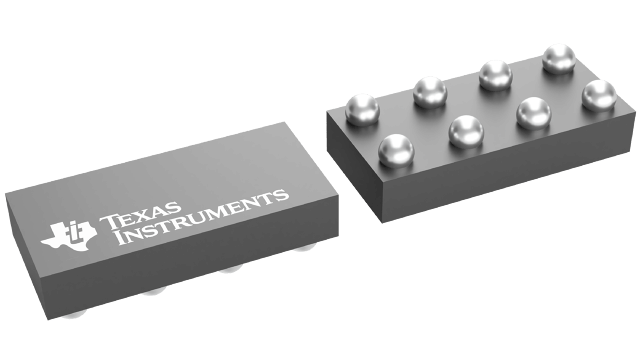
Low-Power Single Positive-Edge-Triggered D-Type Flip-Flop
Pricing (USD)
| Quantity | Unit Price |
| 1 — 99 | 0.551 |
| 100 — 249 | 0.374 |
| 250 — 999 | 0.289 |
| 1,000 + | 0.13 |
The above prices are for reference only.
Specifications
| Manufacturer | Texas Instruments |
| Product Category | Flip Flops |
| RoHS | Y |
| Number of Circuits | 1 |
| Logic Family | AUP |
| Logic Type | True |
| Polarity | Inverting/Non-Inverting |
| Input Type | Single-Ended |
| Output Type | Differential |
| Propagation Delay Time | 27 ns |
| High Level Output Current | - 4 mA |
| Low Level Output Current | 4 mA |
| Supply Voltage - Min | 0.8 V |
| Supply Voltage - Max | 3.6 V |
| Minimum Operating Temperature | - 40 C |
| Maximum Operating Temperature | + 85 C |
| Mounting Style | SMD/SMT |
| Package / Case | DSBGA-8 |
| Packaging | Reel |
| Function | D-Type |
| Height | 0.3 mm |
| Length | 1.9 mm |
| Operating Temperature Range | - 40 C to + 85 C |
| Quiescent Current | 500 nA |
| Series | SN74AUP1G74 |
| Width | 0.9 mm |
| Brand | Texas Instruments |
| Number of Channels | 1 Channel |
| Number of Input Lines | 1 |
| Number of Output Lines | 1 |
| Operating Supply Voltage | 1.8 V, 2.5 V, 3.3 V |
| Product Type | Flip Flops |
| Reset Type | Set, Reset |
| Factory Pack Quantity | 3000 |
| Subcategory | Logic ICs |
| Tradename | NanoStar |
| Unit Weight | 0.000081 oz |
For more information, please refer to datasheet
Documents
| SN74AUP1G74YZPR Datasheet |
More Information
The AUP family is TI's premier solution to the industry's low-power needs in battery-powered portable applications. This family ensures a very low static- and dynamic-power consumption across the entire VCC range of 0.8 V to 3.6 V, resulting in increased battery life. This product also maintains excellent signal integrity (see the very low undershoot and overshoot characteristics shown in ).