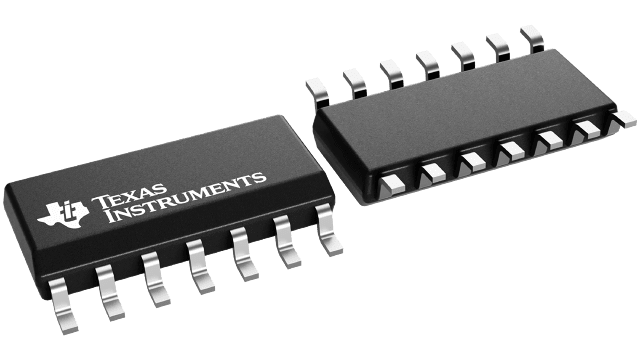
Texas Instruments
VCA821ID
VCA821ID
Regular price
$2.85 USD
Regular price
Sale price
$2.85 USD
Unit price
per
Couldn't load pickup availability
VCA821ID Texas Instruments - Yeehing Electronics
Wideband, > 40dB Adjust Range, Linear in dB Variable Gain Amplifier
Pricing (USD)
| Quantity | Unit Price |
| 1 — 99 | 7.481 |
| 100 — 249 | 6.099 |
| 250 — 999 | 4.794 |
| 1,000 + | 2.85 |
The above prices are for reference only.
Specifications
| Manufacturer | Texas Instruments |
| Product Category | Special Purpose Amplifiers |
| RoHS | Y |
| Series | VCA821 |
| Amplifier Type | VGA |
| Number of Channels | 1 Channel |
| GBP - Gain Bandwidth Product | 320 MHz |
| SR - Slew Rate | 2.5 kV/us |
| CMRR - Common Mode Rejection Ratio | 65 dB |
| Ib - Input Bias Current | 25 uA |
| Vos - Input Offset Voltage | 17 mV |
| Supply Voltage - Max | 12 V |
| Supply Voltage - Min | 7 V |
| Minimum Operating Temperature | - 40 C |
| Maximum Operating Temperature | + 85 C |
| Mounting Style | SMD/SMT |
| Package / Case | SOIC-14 |
| Packaging | Tube |
| Height | 1.58 mm |
| Length | 8.65 mm |
| Supply Type | Dual |
| Technology | BiCOM |
| Width | 3.91 mm |
| Brand | Texas Instruments |
| Shutdown | No Shutdown |
| Dual Supply Voltage | +/- 5 V |
| en - Input Voltage Noise Density | 6 nV/rtHz |
| In - Input Noise Current Density | 2.6 pA/sqrt Hz |
| Maximum Dual Supply Voltage | +/- 6 V |
| Minimum Dual Supply Voltage | +/- 3.5 V |
| Moisture Sensitive | Yes |
| Operating Supply Voltage | 7 V to 12 V |
| Product Type | Special Purpose Amplifiers |
| PSRR - Power Supply Rejection Ratio | 61 dB |
| Factory Pack Quantity | 50 |
| Subcategory | Amplifier ICs |
| Voltage Gain dB | 40 dB |
| Unit Weight | 0.004564 oz |
For more information, please refer to datasheet
Documents
| VCA821ID Datasheet |
More Information
The VCA821 device is a DC-coupled, wideband, linear in dB, continuously variable, voltage-controlled gain amplifier. It provides a differential input to single-ended conversion with a high-impedance gain control input used to vary the gain down 40 dB from the nominal maximum gain set by the gain resistor (RG) and feedback resistor (RF).